



Custom Email Design
Carmel Valley Coffee
Marketing Automation · Content Marketing · Digital Marketing
Read the case studyConversion rates trail benchmarks while competitors capture more first purchases from new subscribers through optimized sequences
Abandoned cart recovery performance disappoints despite significant cart abandonment volumes representing substantial available revenue waiting to be captured
Segmentation remains basic using only purchase history when behavioral data and engagement patterns could power sophisticated personalization
Template design lacks mobile optimization and clear calls to action, causing rendering problems and confused customer journeys across devices
Flow timing and frequency lack optimization with messages sending at suboptimal intervals that either overwhelm customers or miss engagement windows, requiring comprehensive Klaviyo account review to identify each Klaviyo flow that needs improvement and open rate optimization
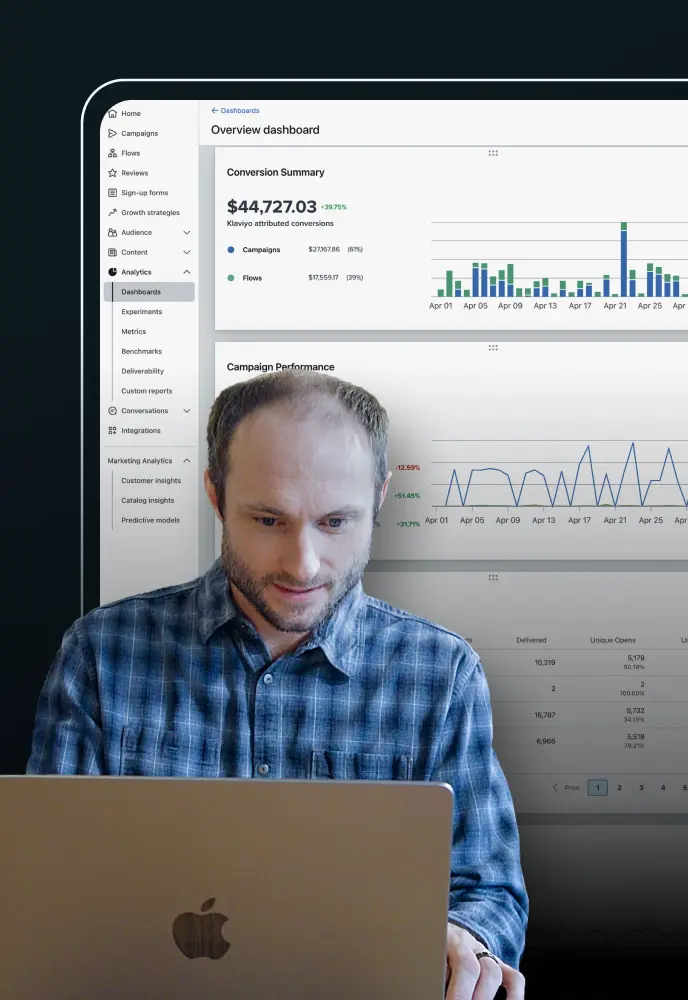
Complete Klaviyo performance audit examining flow strategy, conversion optimization, revenue impact, and technical implementation across all automations
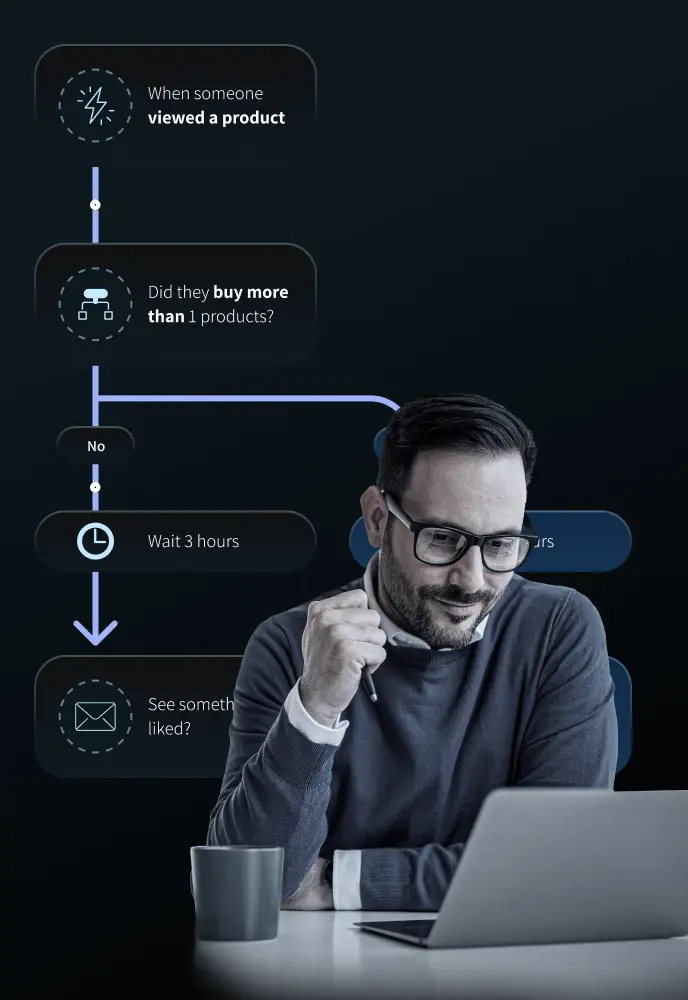
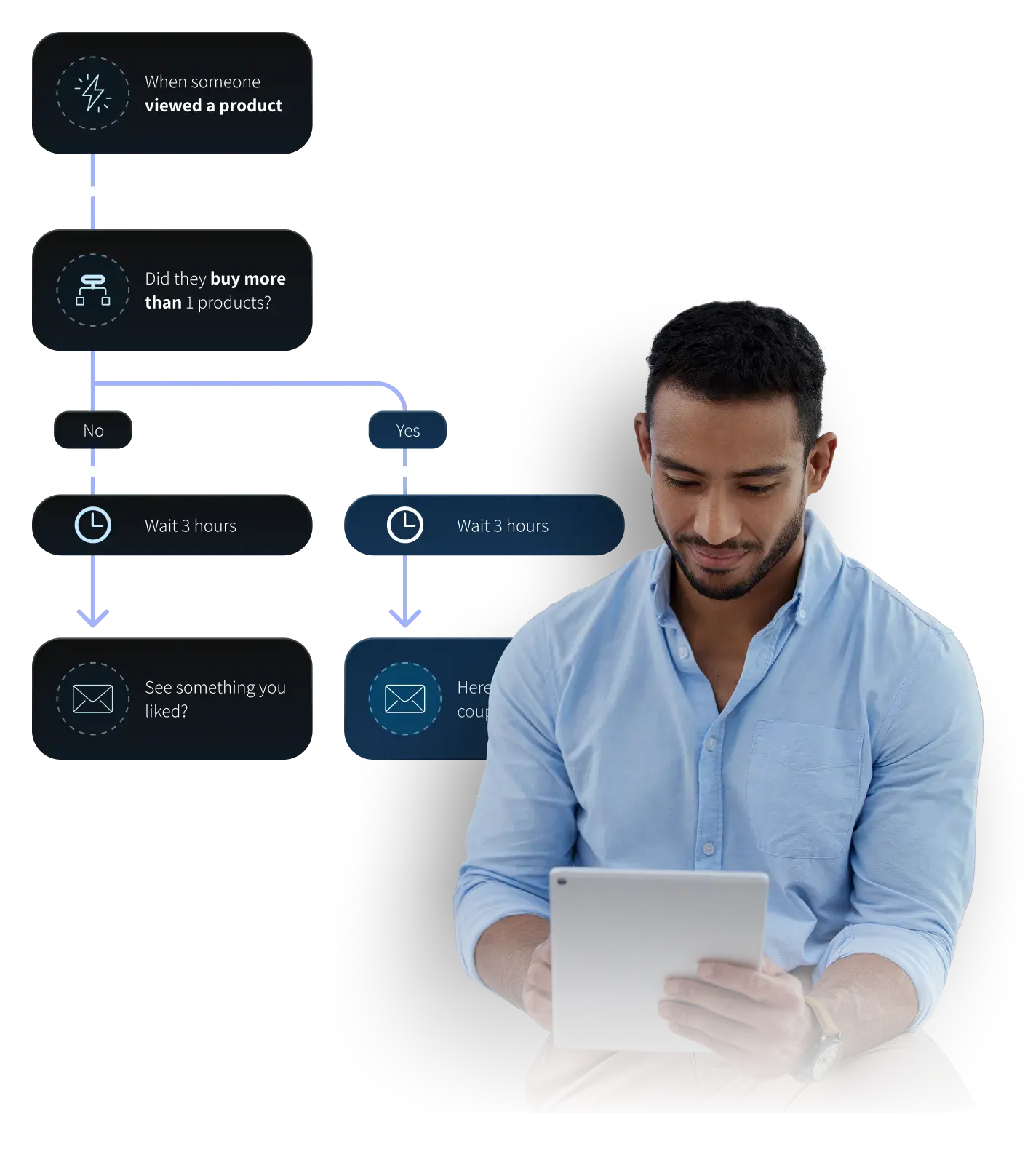
Detailed Klaviyo automation audit analyzing trigger logic, timing sequences, message progression, and customer journey optimization for each automated flow
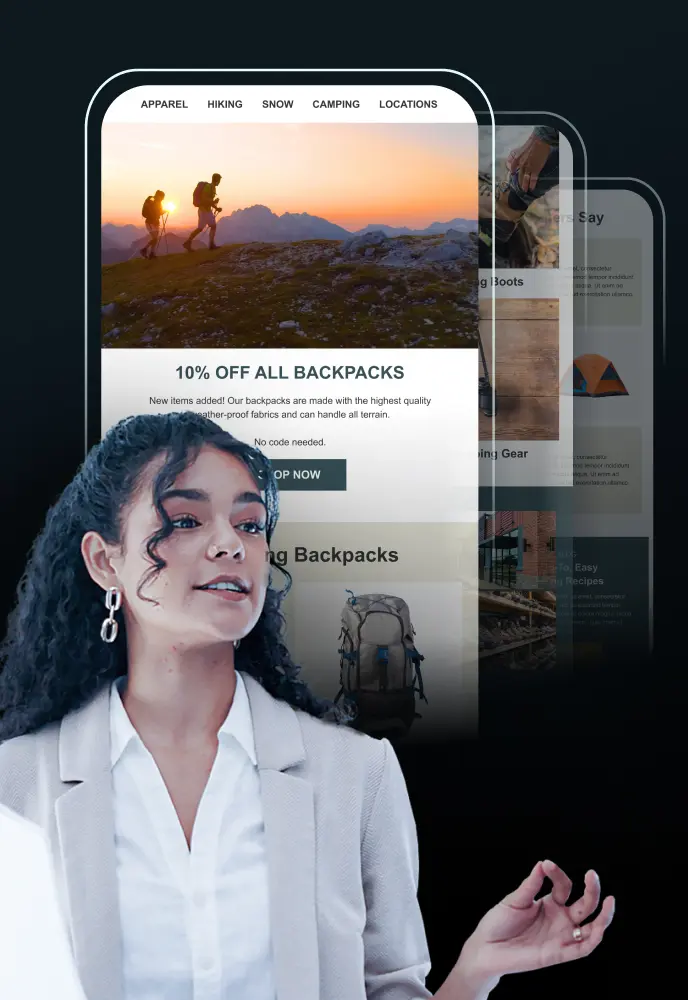
Thorough Klaviyo template audit reviewing design quality, mobile rendering, brand consistency, and conversion-focused elements across all email templates
Strategic Klaviyo segmentation audit evaluating audience definitions, targeting sophistication, personalization depth, and data utilization across customer segments
Expert email flow audit assessing individual flow performance with specific recommendations for welcome series, cart recovery, and lifecycle campaigns that maximize email marketing results and optimize Klaviyo account performance
Klaviyo implementations fail to reach potential for numerous reasons. Flow strategy may lack sophistication or clear revenue goals. Segmentation oversimplifies customer complexity using only basic purchase data. Templates may have rendering issues or weak conversion elements. Timing optimization gets neglected. Measurement focuses on email metrics rather than business impact. These problems compound across multiple flows, creating underperforming automation programs that waste the platform's capabilities. We begin every engagement with comprehensive analysis covering flow strategy, segmentation logic, template quality, timing optimization, and conversion tracking. Our Shopify Klaviyo audit examines how flows integrate with ecommerce data including product catalogs, purchase behavior, and inventory status. The flow performance audit evaluates conversion rates, revenue per recipient, and customer journey performance for each automation. Our Klaviyo audit service assesses new subscriber onboarding sequences, browse abandonment flow effectiveness, and email campaign performance. Our welcome flow audit analyzes subscriber onboarding optimization. The abandoned cart flow audit analyzes recovery performance and optimization opportunities. Our post purchase flow audit examines repeat purchase drivers and customer retention sequences. The winback flow audit reviews lapsed customer reactivation strategies and execution quality.
Custom Email Design
Marketing Automation · Content Marketing · Digital Marketing
Read the case study

Custom Email Design
Marketing Automation · Content Creation · Digital Marketing
Read the case study


Custom UX
Accessibility Compliance · UX Research & Prototyping · Custom Development
Read the case study



E-Commerce Strategy
Marketing Strategy · Custom Email Design · Email Automation
Read the case study

Custom UX
Custom Theme Development · Custom Integration · UX Research & Prototyping
Read the case studyKlaviyo flows need clear strategic objectives tied to measurable revenue goals. Without strategy, flows get built reactively based on platform defaults rather than business needs. Welcome series might exist because Klaviyo recommends them, not because someone defined what successful onboarding looks like. Abandoned cart flows follow standard templates without considering your specific customer behavior or product complexity. This tactical approach misses opportunities that strategic thinking would capture.
Strong flow strategy starts with understanding customer journeys and identifying automation opportunities at each stage. New subscribers need different messaging than repeat customers. First-time buyers require different nurturing than loyal advocates. Cart abandoners respond to different triggers than browse abandoners. Each customer segment and journey stage presents distinct automation opportunities. Strategic flow design maps these journeys and builds targeted automations that move customers toward desired actions at each touchpoint. A comprehensive email marketing strategy integrates Klaviyo flows with broader email marketing objectives to maximize program impact.
Klaviyo's segmentation capabilities enable sophisticated personalization that most implementations underutilize. Basic setups segment only by purchase history, sending the same abandoned cart message to first-time visitors and repeat customers. Advanced implementations use engagement patterns, browsing behavior, product affinity, customer lifetime value, and dozens of other signals to deliver precisely targeted messages. The performance gap between these approaches shows clearly in conversion metrics and revenue per recipient. Proper Klaviyo account configuration respects customer privacy settings and never attempts to share my personal information inappropriately, while still enabling targeted advertising that customers find relevant rather than intrusive. Data should be used for email personalization and targeted advertising purposes that genuinely improve customer experience.
Most Klaviyo users barely scratch the surface of available segmentation data. Purchase history gets used while browsing data sits unused. Email engagement patterns remain unanalyzed. Product category preferences go ignored. Customer value tiers don't inform messaging. Geographic and demographic data collects without application. Predictive analytics capabilities remain unexplored. All this unused data represents personalization opportunities that would dramatically improve relevance and results if properly implemented.
Email templates drive conversion through visual hierarchy, compelling copy, clear calls to action, mobile optimization, and design elements that guide attention toward desired actions. Poor templates sabotage even well-strategized flows. Strong templates can partially compensate for segmentation or timing issues. Klaviyo's drag-and-drop editor makes template creation accessible, but accessibility doesn't guarantee quality. Many Klaviyo templates suffer from cluttered layouts, weak calls to action, poor mobile rendering, or brand inconsistency.

Template quality varies dramatically across design approaches and conversion element treatments. Some design patterns improve performance consistently while others depend on context. Mobile optimization is non-negotiable given mobile email opens exceed desktop across most audiences. Call-to-action prominence affects click rates directly. Image quality and product presentation influence purchase intent. Copy length preferences vary by flow type and customer segment. Testing reveals what works for your specific audience and products.

Many Klaviyo implementations use default templates with minimal customization. Platform templates get light branding but keep generic layouts. Design trends evolve but templates remain static. Competitors invest in custom designs while you send generic layouts. Customer preferences shift but template approach doesn't adapt. Our template analysis identifies specific design improvements, mobile rendering issues, conversion element weaknesses, and brand consistency problems that testing confirms hurt performance.
Message timing dramatically affects flow performance. Send abandoned cart recovery too soon and customers haven't finished shopping. Wait too long and purchase intent fades. Welcome series that sends three messages in 24 hours overwhelms subscribers. Spacing messages across weeks misses engagement windows when interest is highest. Post-purchase sequences that arrive before products do seem tone-deaf. Winback campaigns targeting customers who purchased yesterday waste sends. Getting timing right requires both strategic thinking and data analysis.
Most Klaviyo flows use default timing without optimization. Abandoned cart waits one hour because that's Klaviyo's default, not because data shows one hour performs best. Welcome series spacing follows templates rather than engagement analysis. Post-purchase timing ignores delivery schedules and product usage patterns. Winback definitions use arbitrary day counts without analyzing your specific customer lifecycles. This unoptimized timing leaves performance on the table across every flow.
Understanding how Klaviyo flows drive business results requires proper conversion tracking and attribution. Klaviyo provides extensive analytics, but most users focus on email metrics like open and click rates rather than business outcomes. Did that welcome flow increase first purchase rate? What's the incremental revenue from cart recovery versus purchases that would have happened anyway? How does post-purchase flow engagement correlate with repeat purchase rates? Which winback segments produce highest reactivation ROI? These questions require analysis beyond standard reports.
Many Klaviyo implementations lack systematic performance review. Flows get built then run indefinitely without optimization. Conversion rates go untracked. Revenue attribution remains unclear. A/B tests run but results don't inform subsequent decisions. Benchmark comparisons never happen. This measurement gap means missing improvement opportunities and making decisions without evidence. Regular performance review identifies underperforming flows, reveals optimization opportunities, validates test results, and builds organizational knowledge about what drives results for your customers.
Working with specialized Klaviyo consultants means engaging professionals who understand the platform's capabilities deeply and know how to maximize automated revenue. We bring experience across industries, product types, and business models to identify opportunities specific to your situation and provide recommendations that leverage Klaviyo's full feature set.
Klaviyo offers extensive capabilities that most implementations barely utilize. Default flows and basic segmentation only scratch the surface of what's possible. Our team brings deep platform expertise including advanced segmentation techniques, sophisticated flow logic, custom integration possibilities, and analytics capabilities most users never discover. This specialized knowledge enables us to identify opportunities and solutions that generalist email marketers miss.
Klaviyo built its platform specifically for ecommerce, and our services focus on ecommerce outcomes. We understand cart abandonment psychology, purchase cycle dynamics, product recommendation strategies, inventory-based messaging, and customer lifetime value optimization. This ecommerce specialization means our recommendations address your specific business model rather than applying generic email best practices that may not suit retail contexts.
Our recommendations come from rigorous performance analysis, not subjective opinions or generic templates. We analyze your actual flow metrics, benchmark against relevant comparisons, identify statistical patterns in customer behavior, and base recommendations on evidence from your program. We test hypotheses rather than implementing untested ideas. This analytical approach produces insights specific to your customers and products rather than one-size-fits-all advice.
We care about revenue results, not email metrics. Flow optimization succeeds when it drives more purchases, increases average order value, improves repeat purchase rates, or reactivates lapsed customers profitably. Open rates and click rates matter only as they connect to these business outcomes. This revenue focus means our work produces measurable ROI rather than just improving vanity metrics that don't affect what matters.
Stop leaving automated revenue on the table. Stop using default flows when customized strategies would perform better. Stop accepting mediocre conversion rates when optimization could double results. Our comprehensive Klaviyo audits identify exactly what holds your flows back and provide clear paths to improved performance. Schedule your audit today and discover specific opportunities hiding in your automation data. You'll receive detailed analysis, prioritized recommendations, implementation guidance, and expert support that transforms your Klaviyo flows from basic automations into revenue-generating machines.
Whether it’s a new storefront or a stronger brand,
tell us what you have in mind.