




Platform Migration
Pacbrake
Accessibility Compliance · Custom Development · UX Audit
Read the case studyFragmented customer data across marketing tools, sales platforms, and Google workspace apps, preventing personalized service and accurate reporting.
Delayed synchronization between operational systems creates bottlenecks, inaccurate inventory figures, and poor decision-making based on stale information within your data stack.
Manual data entry between platforms wastes employee time, increases operational errors, and diverts staff from high-value tasks.
Inconsistent order and fulfillment workflows span multiple applications without proper automated coordination.
The limitations of a legacy data stack complicate modern integration standards and generate significant technical debt.
Strategic data sync middleware and unified connectivity architecture transforms operational clarity, drives automation, and stabilizes systems.
Real-time data sync keeps critical business information instantly current across your technology footprint, enabling timely, accurate actions for better business intelligence and data science initiatives.
A centralized, single source of truth from any data source, often starting in a centralized data warehouse, accessible from any required application for deeper data analytics.
Automated, multi-step business processes span various platforms, reducing cycle times and improving efficiency.
Modern, flexible integration architecture allows you to easily incorporate new applications and connect older systems reliably.
Many connectivity projects falter because teams miscalculate the complexities of data governance, data consistency logic, and system dependencies. They build fragile links without deep understanding of business context or cross-application processes. This results in solutions that disrupt workflows, compromise data quality, or require constant manual intervention. Our approach prioritizes business requirements first, applying rigorous testing to confirm stability and accuracy. We use data validation, data transformation, robust data pipelines, and data processing workflows to construct solutions that support operations instead of causing new problems. Purpose-built connectivity reduces manual reconciliation, mitigates risk, and supports high data fidelity and scalability across the entire enterprise.
Platform Migration
Accessibility Compliance · Custom Development · UX Audit
Read the case study


Custom Development
Subscription Management · Product Migration · Digital Style Guide
Read the case study

Custom Theme Development
B2B/Wholesale · Custom UX · Custom Features
Read the case study



Custom UX
Custom Theme Development · Custom Integration · Accessibility Compliance
Read the case study


Custom UX
Custom Theme Development · Custom Integration · UX Research & Prototyping
Read the case studyWe review your complete application landscape, starting with raw data capture and focusing on optimizing data ingestion points. Technical audits document applications, data collection processes, data warehouse schemas, data lake structures, integration points, and dependencies. Our analysis includes reviewing how assets move from Google cloud storage to your cloud data warehouse and auditing data from Google analytics. We conduct interviews to identify bottlenecks and determine where automation provides the greatest value. We map complex, cross-system workflows, create data flow diagrams, and review documentation, data models, business logic, analytics requirements, and compliance needs. We assess transaction volumes, latency targets, governance policies, and regulatory limits. Existing connections are reviewed to identify patterns for reuse and flag technical debt within the broader data stack. We analyze team skill sets and operational procedures. This discovery prevents costly failures that disrupt daily operations or lead to critical data quality issues.
Architecture always precedes development. We design the connectivity layer before coding, selecting the right patterns for enterprise complexity and performance. Whether we build a serverless stack or a modern tech stack, connectivity requires audit trails, security protocols, and high reliability for analytics operations. We evaluate options including service bus patterns, message queues, stream processing architectures, specialized API platforms, and modern development frameworks. We help you choose the right tech stack and cloud platform so the core integration layer can balance flexibility, security, and maintainability while optimizing data movement. Our solutions for CRM, ERP, and commerce data middleware to sync data services maintain consistent information across applications while allowing autonomy.

Every successful tech stack connectivity project follows a structured methodology. We prioritize foundational needs that keep the business functional while progressively expanding capabilities. This phased approach maintains business continuity and minimizes risk as new data ingestion workflows and integration frameworks are introduced, focusing first on core integrations like customer record details and current inventory status.
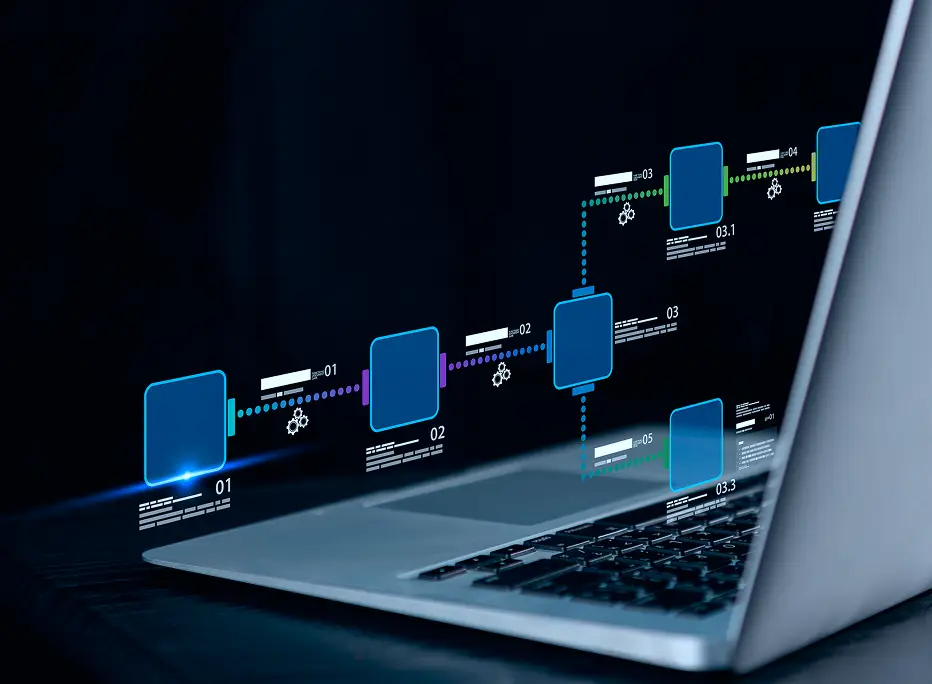
Before creating advanced workflows, we establish integration standards for data governance and structured error escalation. We implement authentication, authorization, encryption, and comprehensive audit logging aligned with security requirements. Integrations are built in iterative sprints, where each stage delivers measurable functionality that teams can refine against actual business requirements and refined data transformation strategies.

We build connectivity using robust practices that guarantee stability under high-pressure conditions. This includes transactional integrity checks, high-volume data ingestion, detailed logging, and compliance documentation. Our architecture handles complex processes, multi-currency support, multi-entity structures, and approval chains, permitting operations to run smoothly with accurate data and reliable performance.
Many projects fail because teams skip fully mapping business workflows, leading to failures when exceptions arise. We document and validate all key processes and analytics dashboards before development. Ignoring data governance standards causes compliance issues, so we implement master data governance structures and lineage tracking early. Inadequate error handling often disrupts operations across multiple systems when an application experiences an outage. We build robust detection, automated alerts, and recovery procedures. We avoid synchronous designs, which create tight system dependencies, by advocating for asynchronous patterns using reliable queuing mechanisms to isolate applications and reduce failure impact. This architecture relies on Integration middleware as the central hub for logic and monitoring.
We use specialized testing suites to rigorously validate connectivity solutions against real-world enterprise distributed system conditions. Full transactional workflows are validated using realistic data volumes and simulated peak transaction levels. We review security controls, audit activity, and performance testing confirms support for peak operational activity and analytics queries. We also test crucial failure cases like outages and data corruption to confirm stable behavior, verifying data recovery for the primary data warehouse. Deployment involves strict change control, rollback plans, and continuity steps, not just migrating code. Continuous monitoring tracks workflow completion, data quality, and security activity. Runbooks define how operational teams respond to issues. During launch, we observe integration behavior and fine-tune based on real-time patterns.
We've built hundreds of complex connectivity solutions across diverse industries. We possess detailed knowledge of ERP data models, Oracle Fusion Middleware processes, CRM processes, warehouse operations, and the technical details that make data stability reliable for analytics under heavy load. Our experience spans multiple enterprise platforms, data centers, and operating system environments, including Google Cloud technologies. When architectural decisions account for enterprise requirements like governance, security, and business continuity, the platform middleware remains stable and supports long-term business growth.
We never build data connections without understanding the end-to-end business workflows. Every middleware and data consistency decision is informed by business requirements, data governance standards, and operational needs. Your new connectivity layer is designed to support your actual business processes, not just shuttle data between applications. We identify the most critical business workflows and prioritize their integration based on direct operational impact and business value. Business value drives every technical decision we make.
We manage the entire process, from planning and design to production deployment. This includes architecture, middleware development, choosing the right frameworks, and operational handoff. Our developers write robust, enterprise-grade code, coordinating across all business units. Every integration is validated and tested for reliability. We support future-proofing via logical application development and deliver a complete solution with built-in scalability.
Launch day is the beginning of the operational phase. We actively monitor the health of the information flows, track completion rates, and optimize performance based on production analytics insights. We provide ongoing support, manage system upgrades, offer specialized middleware development services, maintain integrations as business needs evolve, and offer middleware management services.
Stop struggling with disconnected applications and manual data processes. Partner with data flow specialists to discuss your connectivity needs. Discover how a professional integration platform infrastructure can automate processes and support measurable business growth. We’ll implement the right enterprise integration platform for your organization.
Whether it’s a new storefront or a stronger brand,
tell us what you have in mind.