




Custom UX
Birdwell Beach Britches
UX Research & Prototyping · Custom App Development · Custom Theme Development
Read the case studyDisconnected systems that force employees to manually re-enter data between platforms, which wastes time in the supply chain and introduces errors.
Delayed data synchronization between systems that creates operational inefficiencies and impacts customer relationship management accuracy and customer service responsiveness.
Inconsistent customer information across enterprise software suites, ERP, and commerce platforms preventing personalized customer service and accurate reporting.
Complex order workflows that span multiple systems without proper automation or visibility.
Legacy system limitations that prevent modern integrations with reliable middleware software and create technical debt.
Unified data flow and application integration across all software applications and enterprise application software that eliminates manual work and reduces operational errors.
Real-time synchronization that keeps business-critical information current across your entire technology stack.
Single source of truth for customer, order, and inventory data accessible from any system, improving your ability to generate business intelligence and a better customer experience.
Automated business processes that span multiple platforms, reducing cycle times, improving operational efficiency, and supporting faster decision-making.
Modern enterprise resource planning integration that stabilizes these flows and connects legacy systems with contemporary platforms reliably.
Many integration projects fail because teams misjudge the organizational and technical complexity involved. They create connections without understanding business processes, data governance rules, or system dependencies. This leads to integration middleware that disrupts workflows, damages data, or requires manual fixes. Our approach puts business logic first and applies realistic testing to confirm stability, including integrating a modern AI enterprise system into your enterprise system architecture. We use process validation, data checks, performance testing, and artificial intelligence where appropriate so integrations support every core operation rather than create new problems. Successful supply chain management requires this level of precision. Strong integration middleware reduces manual entry, lowers risk, and replaces the need for a simplistic middleware tool, supporting accurate data across the enterprise.
Custom UX
UX Research & Prototyping · Custom App Development · Custom Theme Development
Read the case studyWe begin by reviewing your full information technology landscape and how data should move to support operations. Technical audits document systems, integration points, and key dependencies. Interviews reveal the disconnects that slow teams and where automation creates the most value. We map cross-system workflows and review documentation, data models, business rules, and compliance needs that guide integration middleware design. We assess transaction volume, performance targets, governance rules, and regulatory limits. Existing integrations are reviewed to identify patterns to keep and areas that add technical debt. We also examine team skills, change management strategies for middleware integration, and operational procedures to guide deployment. This level of discovery prevents failures that disrupt operations or create data quality problems.
Architecture comes first. We design the integration middleware layer before coding, selecting patterns suited for enterprise scale and complexity. Enterprise integration requires audit trails, security controls, and reliability. We review options such as service bus patterns, message oriented middleware (MOM) queues, API platforms, and master data management approaches that support these needs. The selection of the right ERP software connectors and broader enterprise resource planning workflows is crucial here, especially when optimized for supply chain management.
Your middleware integration layer must balance flexibility, security, and maintainability. We choose technologies your team can support long term, including application server technology, with each choice tied to clear operational needs such as high transaction volume, data lineage, approval workflows, and analytics. Our ERP and CRM to commerce integrations keep data consistent across systems while preserving autonomy where needed.
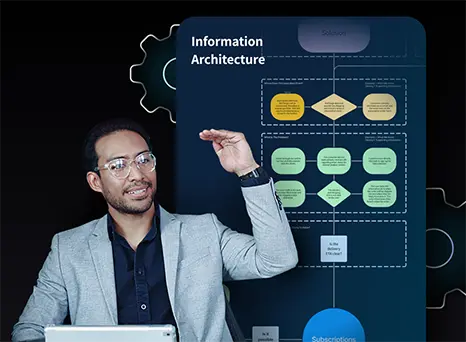
Every successful enterprise integration project starts with a structured methodology. We prioritize core integrations for customer data, order workflows, and inventory updates, as these directly support core business processes, protect revenue, and stabilize operations. This initial focus confirms business continuity and minimizes risk while we introduce new capabilities. We prioritize stabilizing critical functions before expanding into advanced workflows across your environment.

Before building advanced workflows, we establish integration standards defining master data ownership, governance rules, and error escalation paths. We strictly apply authentication, authorization, encryption, and audit logging to align with enterprise security needs. With these controls in place, we build integrations in iterative stages, allowing teams to review and refine functionality against real business requirements.
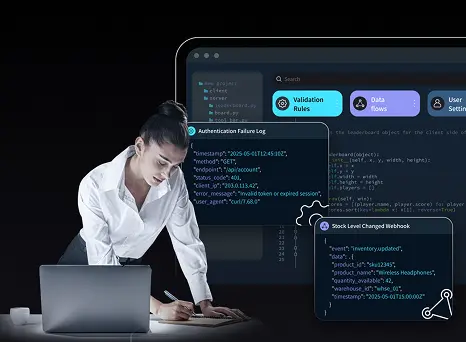
We create integrations using practices that protect stability, including transactional integrity, structured error handling, and detailed logging. Our work supports both simple data syncs and complex processes involving many disparate systems. The middleware manages multi-currency, multi-entity structures, and approval chains, allowing modern, distributed operations to function with consistent data and performance.
Many integration projects fail for avoidable reasons. Teams build connections without understanding full business workflows, which leads to failures when exceptions appear. We document and validate key processes before development. Ignoring data governance also creates compliance issues and data problems, so we apply master data management and lineage tracking from the beginning. Weak error handling disrupts operations when systems fail. We add strong detection, alerts, and recovery methods to protect business activity. Direct synchronous designs often create system dependencies, so we apply asynchronous patterns with queuing to reduce impact. We also implement required security controls with encryption, authentication, authorization, and audit logging throughout the integration middleware layer.
Using our proprietary integration platform, we test integrations with scenarios that match real enterprise distributed system conditions. Full workflows are validated across systems using realistic data and transaction levels. Security controls, audit activity, and compliance needs are reviewed. Performance testing confirms the middleware can support peak activity. We also test failure cases such as outages, network trouble, and data issues to confirm stable behavior. Deployment requires more than moving code. We apply change controls, rollback plans, and continuity steps. Monitoring tracks workflow completion, data quality, performance, and security activity for successful middleware integration. Runbooks define how to respond to issues and escalate critical problems. During launch, we watch integration behavior closely, verify that workflows complete correctly, and adjust based on real operational patterns. We leverage the power of a single integration platform for consistent data governance.
We've built hundreds of enterprise integrations across industries and system landscapes. We know ERP data models, customer relationship management workflows, warehouse operations, and the technical details that make enterprise integrations reliable under production load. Our experience spans multiple enterprise platforms and organizational structures. When architectural decisions account for enterprise requirements like governance, compliance, and business continuity, the platform middleware stays stable and supports business growth.
We don't build integrations without understanding complete business workflows. Every middleware decision is informed by business requirements, data governance policies, and operational needs. Your integration layer is designed to support actual business processes, not just move data between systems. We identify critical business workflows and prioritize them based on operational impact. Business value drives technical decisions.
From planning to production, we handle everything. We manage business process analysis, architecture design, middleware development, software development, security implementation, testing, deployment, and operational handoff. Every integration is validated against business requirements and tested for reliability. We support future-proofing by enabling efficient application development on integrated systems. You get a complete solution that works in production.
Stop struggling with disconnected enterprise systems and manual data processes. Partner with integration specialists who understand both enterprise architecture and business operations. Contact our team today to discuss your enterprise integration middleware needs and discover how proper middleware solution infrastructure can automate operations and support business growth. We'll help you select and implement the right enterprise integration platform for your business needs.
Whether it’s a new storefront or a stronger brand,
tell us what you have in mind.