2026 Clean Up: Backlinks, Disavowing & Reclaiming Domain Authority
Key Takeaways:
-
AI search engines prioritize domain reputation, making clean backlink profiles more critical than ever for visibility.
-
Google's SpamBrain now actively penalizes patterns of toxic links instead of simply ignoring them.
-
The Disavow Tool should only be used for verified manual actions or clear negative SEO attacks, not routine cleanup.
-
Unlinked brand mentions and 404 reclamation offer fast authority wins without building new links from scratch.
-
Toxic backlinks lower your domain authority by dragging down average link quality and triggering low-trust categorization.
Backlink Cleanup: Your 2026 SEO Audit Starter Guide
Happy New Year!
You know what January means: resolutions, fresh starts, maybe hitting the gym twice before giving up. But for anyone running a website, January means something else entirely. You're looking at last year's performance, planning your content calendar, maybe finally tackling that site speed issue you've been ignoring since August.
SEO in January hits different. You're auditing everything. And somewhere in that process, buried under keyword rankings and traffic reports, is your backlink profile. It probably needs attention.
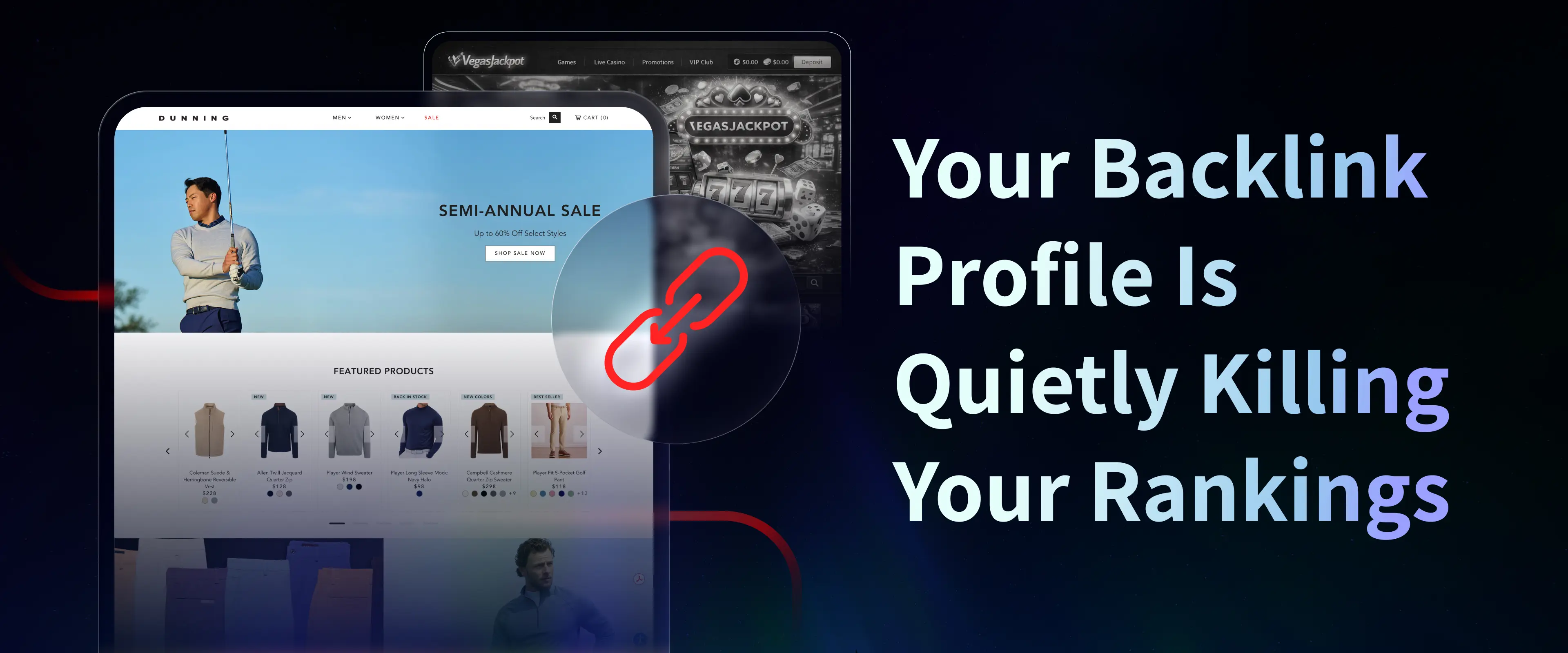
Here's the thing: most brands treat backlinks like a "set it and forget it" situation. You build them, they exist, life goes on. But links decay. Domains go sketchy. That guest post you scored in 2022? The site's now a casino spam farm. And Google's watching.
If you haven't audited your backlinks in the last 6-12 months, you're leaving authority on the table. Worse, you might be actively hurting your rankings with toxic links you don't even know about.
Let's fix that.
Why Backlink Health Matters More in an AI-Search Era
AI search engines like Google's Search Generative Experience (SGE), Perplexity, and ChatGPT's search features are changing how content gets surfaced. These search engine platforms evaluate domain reputation at scale.
When AI decides whether to cite your content, it's looking at trust signals. Backlink quality is one of the biggest. A site with quality backlinks gets prioritized. A site with spammy, irrelevant, or toxic backlinks? It gets buried or ignored entirely.
This isn't new, but the stakes are higher. Traditional Google search might have given you some grace with a mixed backlink profile. AI search is less forgiving. It's trained to recognize patterns, and if your link profile looks messy, you're categorized as low-trust faster than you can say "algorithm update."
So if you've been coasting on your 2019 link-building wins, now's the time for a proper link cleanup.
How to Identify Toxic or Spammy Links
You can't fix what you can't see. First step? Get eyes on your full backlink profile.
Tools You'll Need
-
Ahrefs: Best for comprehensive link discovery and spam scoring
-
SEMrush: Strong competitor analysis and toxicity markers
-
Moz: Good for Domain Authority benchmarking
-
Google Search Console: Free, but limited. Use it as a supplement, not your primary tool
Run a full backlink audit in at least one of these tools. A good backlink checker will show you everything pointing to your domain. Export everything. Yes, all of it. You want the full picture.
What You're Looking For
Red flags that scream "toxic link":
-
Links from adult, gambling, or pharmaceutical sites (unless that's your niche)
-
Links from sites with zero organic traffic
-
Links from domains that exist purely to sell links
-
Comment spam or forum spam with your anchor text
-
Links from hacked sites with bizarre anchor text
-
Links from foreign-language sites completely unrelated to your business
-
Links from sites with spam scores above 60% (in Ahrefs or SEMrush)
Gray area links to investigate:
-
Links from low-traffic blogs that seem legitimate but have weird ad placements
-
Links from press release distribution services
-
Links from directory sites (some are fine, many aren't)
-
Links with over-optimized anchor text that you didn't build yourself
Not every low-authority link is toxic. A genuine local blog linking to you? That's fine. A scraper site that copied your content and linked back? Not fine.
How Google Treats Spam Links in 2026
Google's SpamBrain has gotten smarter. It's now integrated with the Helpful Content system, which means spam detection isn't just about links. It's about the entire site ecosystem.
Here's what changed: Google used to mostly ignore spammy links pointing to your site. Now, they can actively count against you if the pattern looks intentional or if your profile is overwhelmingly low-quality.
The December 2024 core update hit sites hard that had:
-
Thin content propped up by purchased links
-
Link schemes that tried to game topical authority
-
Backlink profiles that didn't match the site's actual expertise
Google's gotten better at understanding link context. A random spammy link from an irrelevant site? They'll likely ignore it. But 50 random links from irrelevant sites using exact-match anchor text? That's a pattern. And patterns trigger penalties.
The good news? Google still doesn't penalize you for most spam links you didn't create. The bad news? If your overall link profile quality is tanking, your domain authority suffers regardless of intent. Even a single bad backlink from a particularly toxic domain can raise red flags if it's part of a broader pattern.
When to Use Google's Disavow Tool (And When Not To)
The Google Disavow Tool is nuclear. Use it carefully.
When You SHOULD Disavow:
-
You have a verified manual action from Google related to unnatural links
-
You did some shady link building in the past and want to clean up before it becomes a problem
-
You've been hit by negative SEO (rare, but real. Someone mass-built spam links to your site)
-
You have a cluster of obviously toxic links that you can't get removed manually
When You SHOULD NOT Disavow:
-
You're just worried about a few low-quality links (Google ignores these on their own)
-
You haven't tried to contact site owners to remove links first
-
You're not sure if the links are actually toxic (don't guess. Check spam scores and traffic)
-
You're disavowing links just because they're low Domain Authority (DA isn't a Google metric, and low DA doesn't mean toxic)
How to actually do it:
-
Create a .txt file with the URLs or domains you want to disavow backlinks from
-
Use the format: domain:examplebadsite.com (to disavow an entire domain) or just paste individual URLs
-
Upload to Google Search Console under the Disavow Links tool
-
Wait. It can take weeks or months for Google to process this.
Pro tip: Keep a master document of every link you disavow and why. If you switch agencies or consultants, you'll need this history.
How Toxic Backlinks Lower Authority Scores
Let's talk about what actually happens when your backlink profile goes sideways.
Domain Authority (Moz), Domain Rating (Ahrefs), Authority Score (SEMrush). These are third-party metrics, not Google rankings. But they correlate strongly with organic performance because they're measuring similar things Google cares about: trust and link equity.
When you accumulate bad backlinks:
-
Your average link quality drops. Algorithms calculate your domain's authority based on the quality of sites linking to you. Spam links drag that average down.
-
Google devalues link equity passed to you. If Google determines a bad link is manipulative or low-quality, it passes zero value. You're not getting penalized, but you're not getting credit either.
-
Your site gets categorized with lower-trust sites. If your backlink neighborhood is sketchy, Google groups you accordingly. This affects how aggressively your content gets crawled and ranked.
-
AI search models trust you less. Machine learning models trained on web data learn to associate domains with trust signals. A polluted link profile is a red flag.
You won't lose rankings overnight from a handful of bad backlinks. But death by a thousand cuts is real in SEO. Let harmful backlinks pile up for years, and you'll wonder why competitors with "worse content" are outranking you.
A proper link detox can help reverse this damage, but prevention is always better than cure. Building quality backlinks from the start means you spend less time cleaning up harmful backlinks later.
Backlink Reclamation Strategy
Cleaning up toxic links is defense. Reclaiming lost or unlinked mentions is offense.
This is where you can actually gain authority fast without building new links from scratch.
Unlinked Brand Mentions
Your brand gets mentioned online all the time without a link. Blog posts, news articles, social media screenshots, forum discussions. People talk about you, but don't link.
How to find them:
-
Use Ahrefs' Content Explorer or SEMrush's Brand Monitoring
-
Search Google for "YourBrandName" -site:yourdomain.com
-
Set up Google Alerts for your brand name
How to reclaim them:
Reach out to the author or site owner with a short, friendly email:
"Hey [Name], saw you mentioned [Brand] in your post about [Topic]. Thanks for the shout! Would you be open to adding a link so readers can check us out? Here's the URL: [link]. Appreciate it!"
Keep it casual. Don't beg. Most people will add the link if the mention already exists.
404 Reclamation
Sites link to your content. Then you redesign your site, change URLs, or delete old pages. Now those links point to 404 errors.
You're still getting the referral traffic (or trying to), but you're losing the SEO value and frustrating users.
How to find broken backlinks:
-
Run a backlink audit in Ahrefs or SEMrush
-
Filter for links pointing to 404 pages on your domain
-
Export the list
How to fix them:
-
If the old page still makes sense, restore it or create a 301 redirect to the most relevant current page
-
If the content is outdated, redirect to your homepage or a related resource hub
-
Reach out to high-authority sites linking to the 404 and ask them to update the URL
Low-hanging fruit with high ROI. You already earned these links once. Don't let them go to waste.
Content Refreshes That Naturally Build Authority
Old content loses links over time. People link to the "2020 guide," then forget about it. You can reclaim that attention by refreshing and republishing.
What to refresh:
-
High-traffic posts that haven't been updated in 12+ months
-
Posts that ranked well but have dropped recently
-
Content with outdated stats, tools, or examples
How to do it:
-
Update all data, examples, and screenshots
-
Add new sections based on current search intent
-
Change the publish date (yes, really. Google notices)
-
Re-promote on social, email, and outreach
When you refresh content properly, sites that linked to the old version often re-share the updated one. You're reminding people you exist and giving them a reason to link again. Fresh content attracts quality backlinks naturally because it demonstrates you're actively maintaining your expertise.
Your 2026 Backlink Cleanup Checklist
Let's wrap this up with action steps you can take this week:
- Run a full backlink audit in Ahrefs, SEMrush, or Moz
- Identify toxic links using spam scores and manual review
- Try to remove harmful links manually before disavowing (email site owners, use contact forms)
- Disavow remaining bad backlinks if you have a manual action or clear negative SEO attack
- Find unlinked brand mentions and reach out to reclaim them
- Fix 404 backlinks with redirects or page restorations
- Refresh your top 10 performing posts from last year to reclaim lost links
Backlink cleanup isn't glamorous, but it's one of the highest-ROI SEO tasks you can do. Backlink cleanup protects what you've already built and reclaims what's rightfully yours. Search engine algorithms reward sites that maintain clean, authoritative link profiles.
Ready to Reclaim Your Domain Authority?
If this feels overwhelming (or you just don't have time to wade through thousands of backlinks), we get it. Arctic Leaf specializes in technical SEO audits that actually move the needle. No fluff reports, just actionable fixes.
Book a 2026 SEO Audit and we'll handle your backlink cleanup, identify reclamation opportunities, and give you a clear roadmap to stronger rankings this year.